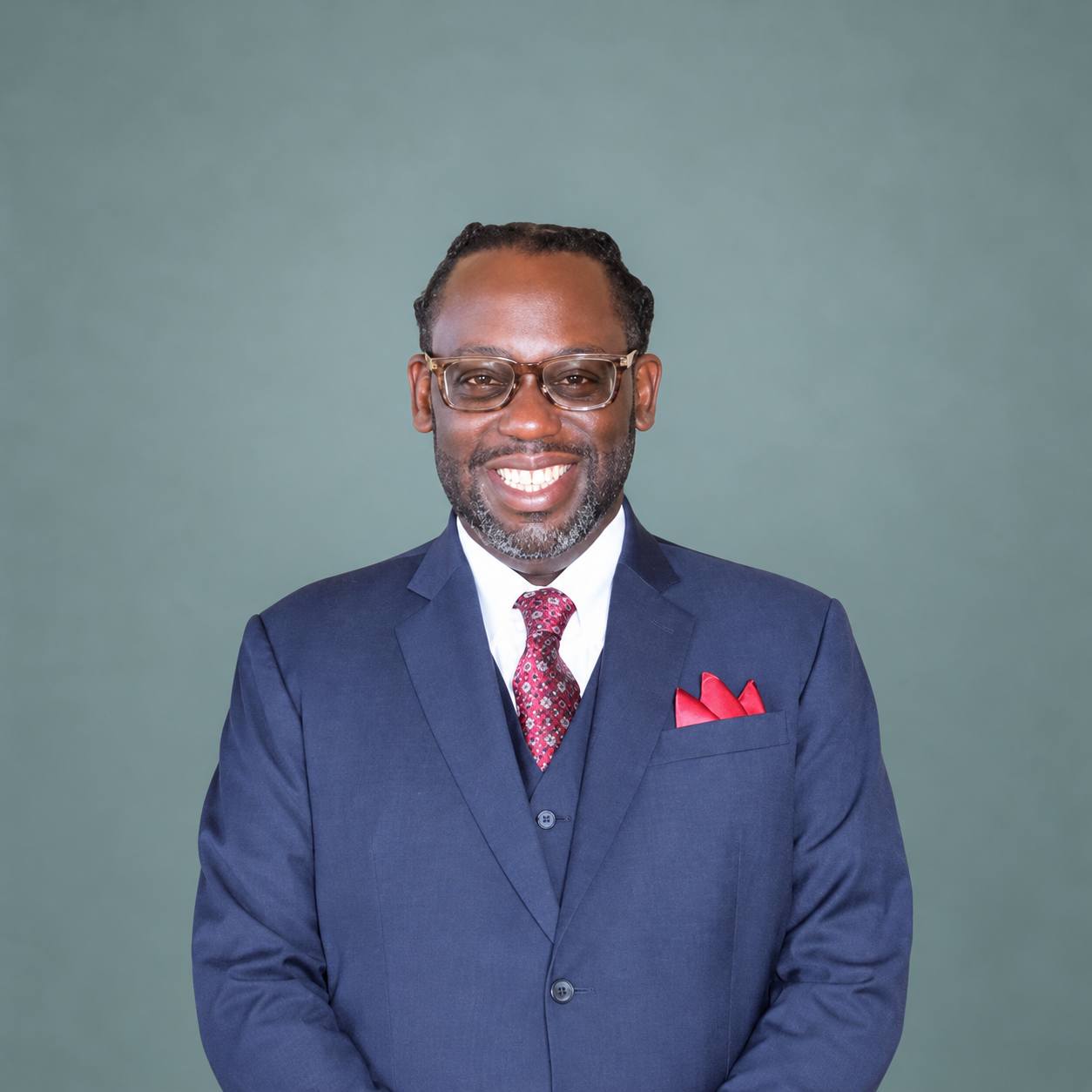
Charles Dukes, Ed.D., Ph.D.
Dean and Professor
College of Education
Dean's Office | Special Education
Boca Raton Campus | ED 47 - 215
Charles Dukes
Charles Dukes holds the rank of Professor in the Department of Special Education. Dr. Dukes earned a doctorate in Special Education from Florida International University in Miami, Florida in 2002 and a second doctorate in Experimental Psychology from Florida Atlantic University in 2019.
Dr. Dukes teaches classes in Disability Studies, Applied Behavior Analysis, Classroom Management, and Inclusive Education for General Educators. He has also taught special topic courses focusing on the application of evolution to human behavior.
Dr. Dukes is a member of two professional organizations: TASH (formerly known as The Association for Persons with Severe Handicaps) and the Council for Exceptional Children (CEC) since 1999. Charles is active in TASH, serving on the review board for the research journal, Research and Practice for Persons with Severe Disabilities (RPSD).
His research interests include: special education teacher education, conceptual change, development of social relationships for individuals with intellectual disabilities, and skill development for adolescents and adults with Autism Spectrum Disorders (ASD).
Learn About My Research
My research interests are broad and this is reflected in the diversity of projects that I have conducted over the years. On this page I have included select projects by research topic. Click on the titles below to see the citation, abstract and executive summary of the project.
Special Education Teacher Education
A review of State Department of Education and school district websites was conducted to determine how policy related to the Common Core State Standards (CCSS) was communicated to teachers of students with severe disabilities. Four states were selected: California, New York, Illinois, and Pennsylvania. State Department of Education websites and three local school districts within each state were chosen for review using locale codes to ensure representation of city, suburban, and rural districts. A total of 16 websites were analyzed using an original instrument designed to capture information about CCSS implementation efforts. Results indicate that there is little information about students with severe disabilities or instructional/pedagogical guidance for teachers in regard to the CCSS on these sites. Thus, it may be difficult for teachers, based on this sample of websites, to translate standards into educational programming for students.
Dukes, C., Darling, S. M., &Bielskus-Barone, K. (2017). State’s description of common core state standards to support students with severe disabilities. Research and Practice for Persons with Severe Disabilities, 143-154.
Darling, S. M., Dukes, C., & Hall, K. (2016). What unites us all: Establishing special education teacher education universals. Teacher Education and Special Education, 39(3), 209-216. doi 10.1177/0888406416650729.
Skill Development for Adolescents and Adults with Autism Spectrum Disorders (ASD)
Example Syllabi
- EDG 4419 Building Classroom Management and Discipline
- EEX 4472 Instructional Practices for Students with Moderate and Severe Disabilities
- EEX 2091 Disability and Society
- EDG 1930 Evolution for Everyone
Get Involved in my Research
Development of Social Relationships
Dinner and a movie... the typical date? But, there are questions, so many questions... who do you date and how do you find this person? Of course, there is social media, on line dating and a host of other outlets... that most certainly results in finding the perfect date, right? Let’s be serious, it isn’t easy and perhaps even more difficult for those who may have physical, cognitive and/or social skill deficits.
Do you think you might date or even marry a person with a disability? Share your attitudes about dating and marrying a person with a disability here, Looking for a date or a mate?
Research Interests
My research focuses on inclusive education and living for people with intellectual and developmental disabilities, with the most extensive support needs. I investigate nature/needs and strategies to foster social relationships, independent living skills, and the intersection of culture and disability. I am also interested in teacher preparation and improving outcomes for students with the most extensive support needs across settings.
Research Interest Keywords
Inclusive Education, Intellectual And Developmental Disabilities (IDD), Social Relationships, Independent Living Skills, Culture And Disability, Special Education Teacher Preparation
Research Methods Keywords
Single-case Design, Secondary Data Analysis, Data Mining
Software Used in Your Research
SPSS