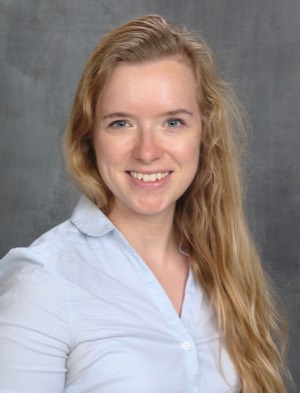
Portrait of Dr. Vivian Merk

Vivian Merk, Ph.D.

Assistant Professor

College of Engineering and Computer Science

Chemistry and Biochemistry | Ocean and Mechanical Engineering

Boca Raton Campus

Education

  • Ph.D., ETH Zurich, Switzerland

Research Interests

My research is related to biomineralization and bio-inspired hybrid composites with superior performance. Towards a deeper understanding of biological processes, I employ a broad variety of experimental techniques, such as electro-optical methods, Raman microscopy, and synchrotron-based X-ray imaging.

In particular, my research interests include:

  • Hierarchical biomaterials
  • Crystallization in confinement
  • Organic-inorganic interfaces
  • Selective ion accumulation in biological organisms

Research Site

Material Advancements

To advance our understanding of biological processes, Vivian Merk, Ph.D., assistant professor of chemistry in the Charles E. Schmidt College of Science, uses an interdisciplinary approach and cutting-edge experimental techniques to examine inorganic structures that provide support, protection and storage for living organisms.

Merk is particularly interested in analyzing natural biomineralized structures and developing bio-inspired composite materials for real-world applications, such as biomedical engineering, construction and environmental engineering. Her research addresses common problems in health care, including a patent-pending innovation to mitigate hospital-acquired infections through improvements in wound care. She is also interested in developing solutions to combat harmful algae blooms and reduce global warming. Merk’s goal is to translate these innovations from the lab to the market so they can directly benefit people.

Prior to her appointment at FAU, Merk received her bachelor’s and master’s degrees in chemistry from the University of Duisurg-Essen, Germany. She earned a doctorate degree in civil engineering from ETH Zurich, Switzerland.

Here is more information about Vivian, in her own words:

The goal of my doctoral thesis was to improve the macroscopic properties of wood (e.g., making it more fire-resistant) by incorporating inorganic minerals in the cell wall structure. I highly enjoy interdisciplinary research at the intersection of chemistry, biology, materials science, and engineering. I find it particularly intriguing that many biomineralized structures span multiple scales and levels of hierarchy. A benefit of this research is that it advances our fundamental understanding of biological structures, while providing tangible real-world applications in biomedical engineering, construction, or environmental engineering.

My research contributes to a better understanding of fundamental biomineralization processes in nature. Many of the research projects address pressing health care problems, such as chitosan-based wound dressings that mitigate nosocomial infections. Other projects in the lab directly benefit the environment by combating harmful algae blooms or by addressing global warming through carbon dioxide absorption in seawater.

I find it very interesting how minerals align within complex organic scaffolds. Our lab has made significant strides in developing protocols for nanoscale imaging of challenging biological materials, such as hydrogels or cyanobacteria, in the near-native state.

I am expecting that my group will continue developing materials based on natural and widely available raw materials that can compete with conventional plastics. I hope that some of these innovations will eventually evolve into consumer products.

The Office of Technology Development was immensely helpful throughout the patent application process, including consultations on patent protection and commercialization strategies. The undergraduate student and co-inventor, Satviki Singh, had the unique opportunity to present our invention at the Next Generation Inventors Session of the 2022 National Academy of Inventors Annual Meeting in Phoenix, Ariz.

Only a few people know that one of my hobbies is painting.