Strategy & Component Guide: Spotlight Stories
Spotlight Stories is the university’s single, standardized naming convention replacing legacy terms like "case studies," "student profiles," "alumni success stories," and "faculty highlights." This unified model simplifies site architecture and brings editorial consistency across all FAU colleges and divisions.
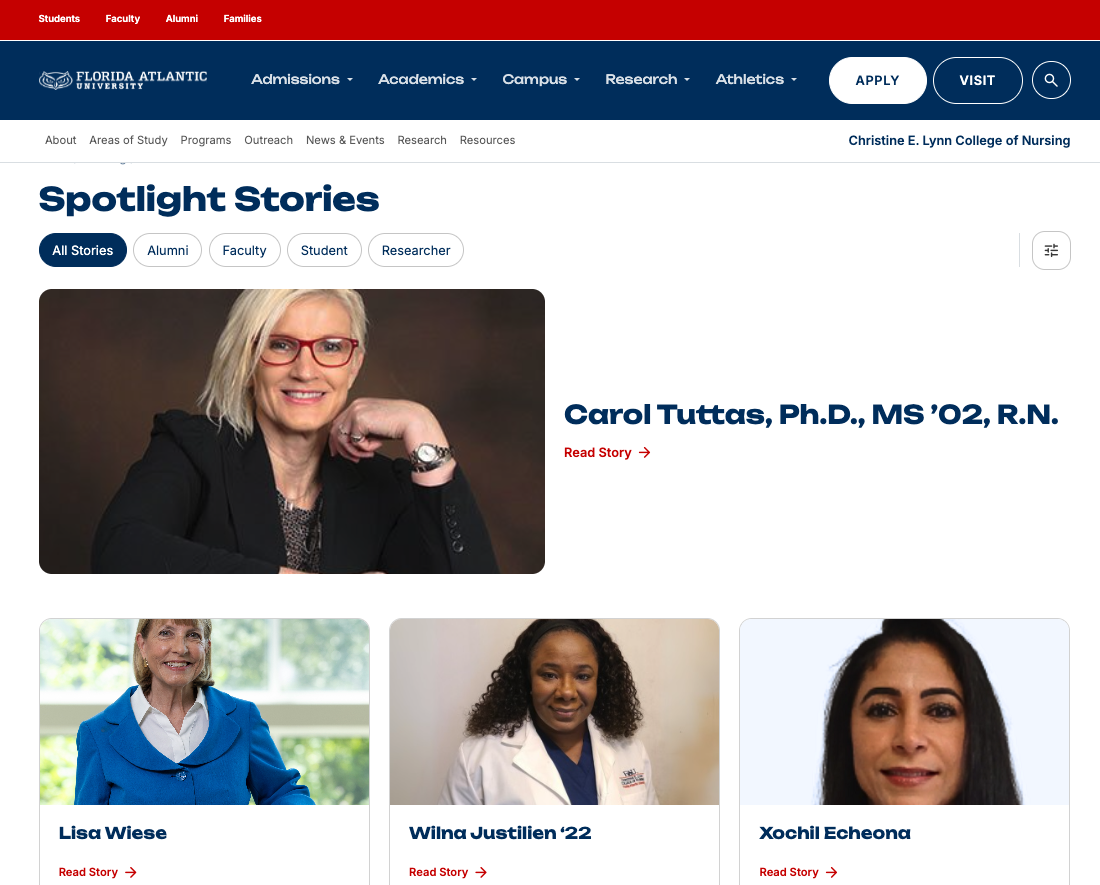
1. Directory Location & Creation
All spotlight stories reside in a single, centralized directory root under the primary About section of each college or division:
-
CMS Publishing Module: Content managers must use the dedicated Spotlight Stories Blog Module within Modern Campus CMS to publish stories.
-
Universal Scope: Stories can feature students, alumni, faculty, staff, donors, or industry partners.
-
Image Guidelines: Photography must be purely photographic. Never overlay text, names, dates, or logos onto spotlight images, as automated cropping across viewports will cut off the graphics.
2. Taxonomy: Categories & Tags
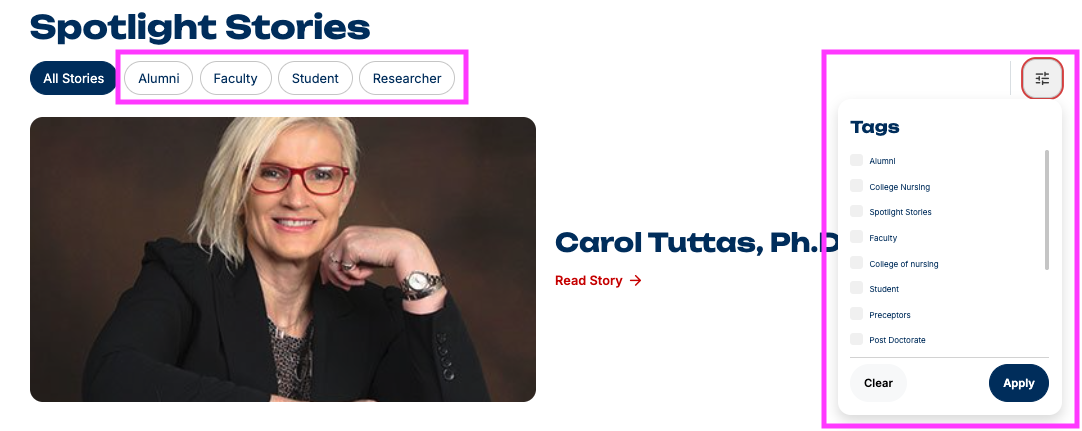
To support dynamic syndication without duplicating pages, every spotlight story relies on a two-tiered organization model:
-
Categories: High-level groupings used to define the core subject (e.g., Student, Alumni, Faculty, Research, Community).
-
Tags: Granular metadata labels assigned to associate the story with specific academic departments, majors, research labs, student clubs, or advisory groups (e.g.,
tag: Department of Physics,tag: First-Gen Students,tag: Marine Lab).
3. Display Components
Spotlight stories are surfaced across the university ecosystem using two specialized display components:
A. Spotlight Index Component
-
Primary Placement: Used exclusively on the main landing page (
/about/stories/). -
Functionality: Serves as the comprehensive repository and archive, rendering all spotlight stories published across the entire college.
B. Spotlight Carousel Component
-
Primary Placement: Embedded on any interior page (e.g., Areas of Study, Department landing pages, Research Centers, Resources).
-
Functionality: Uses metadata tag filtering to display a curated, interactive horizontal slider featuring only stories relevant to that specific page topic without creating duplicate content.