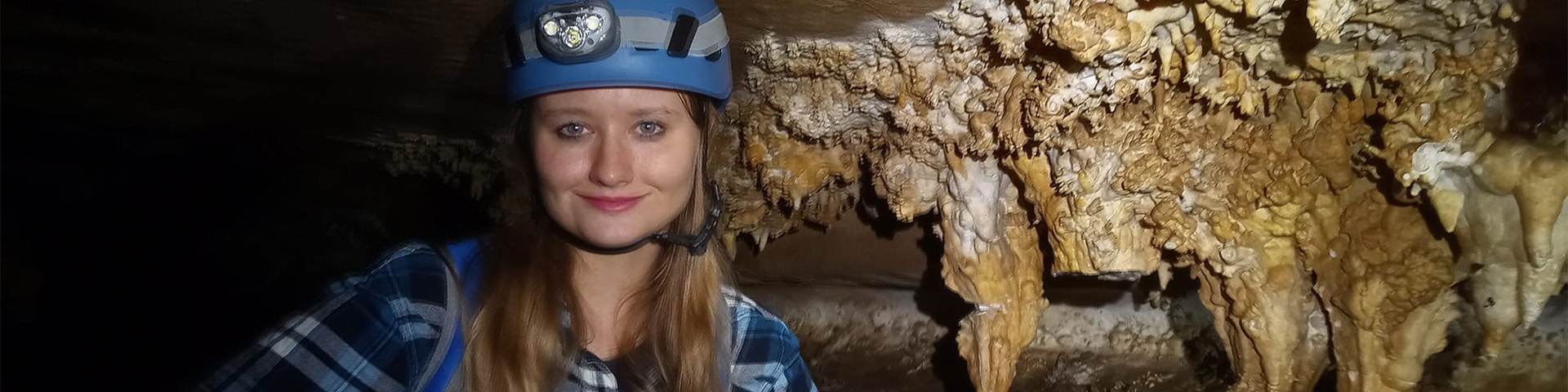
At Florida Atlantic, you’ll work closely with experienced, published faculty who are committed to mentoring you. The department’s small size means you’ll get personalized guidance and the chance to develop your own research interests. You can participate in original research as an undergraduate or graduate student, including fieldwork in Ecuador and hands-on projects in South Florida. Many students go on to top doctoral programs or launch careers in education, research, and applied anthropology.
Degrees Offered at Florida Atlantic
Undergraduate
- Bachelor of Arts (BA) in Anthropology
- Minor in Anthropology
- Honors Program in Anthropology
Graduate
- Master of Arts (MA) in Anthropology
- Master of Arts in Teaching (MAT) in Anthropology
Explore Degree Programs in Anthropology
Educational Objectives & Student Outcomes
2. Gain hands-on experience in research methods, fieldwork, and data analysis.
3. Build skills in critical thinking, communication, and cross-cultural understanding.
4. Prepare for advanced study or professional careers in anthropology and related fields.
2. Apply research skills in cultural, biological, and archaeological contexts.
3. Communicate findings clearly in written and oral formats.
4. Conduct independent or collaborative research projects.
5. Engage ethically and thoughtfully with diverse communities and perspectives.
- You must submit an Undergraduate Major/Minor Change form to AL Student Academic Services in room AH213.
- Take 15 credits of 3000-4000 level Anthropology courses. You must receive a grade of “C” or better for each course.
- Your transcript will be reviewed to ensure you have taken the required 15 credits and passed with a grade of “C” or better. Once your transcript is verified, you will be approved to minor in Anthropology.
We have a small department where each graduate student receives mentoring and guidance in a close working relationship with a faculty member.
After receiving a masters degree from Florida Atlantic University, students are accepted into prestigious doctoral programs, or begin working in the field.
The Masters Program in Anthropology at Florida Atlantic University offers the student an in-depth exposure to biological anthropology, cultural anthropology and archaeology, providing a solid training in theory, methods, and analysis. The masters program offers the student the opportunity to put anthropology into practice, to pursue an intellectual quest, and to creatively and critically construct a research program that reflects the student's particular interests.
Students embark on a 30-credit hour course of study that encompasses anthropological theory, seminars in the subfields of anthropology, advanced training in their chosen subfield, topical courses, and quantitative reasoning. The coursework provides the foundation for the student's independent and original research for a masters thesis, developed under the supervision of department faculty. Many of our graduate students, based on the skills and knowledge they acquired at Florida Atlantic University, move on to complete their doctoral work at varied institutions.
Graduate students in the Department of Anthropology develop original research projects for their theses. The masters thesis is a demonstration of the student's facility with synthesizing anthropological theory and methods into a sustained and persuasive examination of a topic important in anthropology.
Biological Anthropology students most often focus their thesis research on issues associated with human evolution and adaptation. Whether the thesis involves the analysis of actual osteological material from Florida, South America, Africa, or Europe, or involves the analysis of CAT or MRI scans, students acquire excellent, state-of-the-art training in biological anthropology.
Cultural Anthropology thesis research is extraordinarily varied in topical and theoretical direction. Students have carried out research with local immigrant groups (e.g. Maya, Dominican, Haitian), in South American villages, and on a variety of social issues in the U.S. (e.g. diet, healthcare, the environment).
Archaeological thesis students conduct research in a variety of venues, with diverse materials. For example, students have focused on issues in the prehistory of south Florida, Ecuador, Cuba, and Mexico, utilizing such materials as ceramics, shell, animal and fish bone, lithics, and settlement patterns.
Master of Arts Program in Anthropology
The M.A. degree in Anthropology focuses on the interplay of methods, data and theory in anthropology and allows for specialization in the subfields of cultural anthropology, biological anthropology or archaeology. The graduate program's emphasis is on the linkage of "materials" analysis (e.g. bone, shell, ceramic, lithic, interview/observational and behavioral data) to major schools of anthropological thought. The department's program aims to contextualize and advance the understanding of being human in the past and the present. The degree prepares students for doctoral work in anthropology.
Admissions Requirements
The applicant must have earned a baccalaureate degree from an accredited institution with a GPA of 3.0 or higher in the last 60 credits taken for the degree. The application requires (1) a Statement of Purpose and (2) two letters of recommendation sent directly to the department. The application must have the approval of the department. Where there is deficiency in a requirement for admission or some other problem, the applicant may be admitted conditionally as decided by the department.
Degree Requirements
The M.A. curriculum requires the completion of a minimum of 30 credits earned and the maintaining of a 3.0 GPA in all coursework. The minimum passing grade in each course is "B."
Core Requirements:
ANG 6034 Seminar: Anthropological Theory (3 cr.)
ANG 6095 Proposal Development and Writing (3 cr.)
ANG 6115 Seminar in Archaeology (3 cr.)
ANG 6587 Seminar in Biological Anthropology (3 cr.)
ANG 6490 Seminar in Cultural Anthropology (3 cr.)
ANG 6486 Quantitative Reasoning in Anthropological Research (3 cr.)
ANG 6971 Master's Thesis (1-6 cr.) (May take multiple times)
Methods Requirement: At least one course from this list:
ANG 5940 Internship in Anthropology (2-4 cr.) (May take multiple times)
ANG 6090 Advanced Anthropological Research 1 (3 cr.)
ANG 6092 Advanced Anthropological Research 2 (3 cr.)
ANG 6199 Research Methods in Archaeology (3 cr.)
ANG 6492 Research Methods in Sociocultural Anthropology (3 cr.)
ANG 6536 Research Methods in Bioarchaeology (3 cr.)
ANG 6905 Directed Independent Study (1-4 cr.)
ANG 6930 Special Topics (1-3 cr.)
Prior to registering for courses in the first semester of graduate study, the student must consult with the department's graduate advisor to determine the likely sequencing of course work in the student's program.
The Admissions Committee may determine that the applicant must enroll in undergraduate anthropology courses as a condition for graduate work. These remedial courses are not applicable to graduate credit.
Students must demonstrate proficiency of a language appropriate to their field of specialization. Students can fulfill this requirement by completing a two-semester sequence in a language or a Reading for Research course (e.g. FRE/GER/SPN 5060). Alternatively, students may demonstrate proficiency in a language by examination as determined by the department.
A public thesis proposal defense is required. Work on the thesis is expected to begin upon successful defense of the proposed research. Students must be enrolled for a minimum of 1 or up to a maximum of 6 credits in ANG 6971 during the semesters they are working on the thesis and the semester in which they expect to graduate.
Admission to Candidacy
After completion of the thesis proposal defense, a student is eligible for admission to candidacy. The student must file an approved Plan of Study form no later than the third semester of the student's program. In preparing the plan, the student should take professional objectives into consideration as well as all department and University requirements. A completed Research Compliance Verification form must be attached to the Plan of Study form. After the plan has been filed, subsequent major changes must be approved by the chair of the department, the student's advisor and the dean of the Graduate College.
Master of Arts in Teaching
The Department of Anthropology also offers a Master of Arts in Teaching (M.A.T.) degree designed for any student wishing to prepare for teaching at the elementary, secondary, or community college level. This program is particularly appropriate for current teachers who are looking to build anthropological knowledge into their curricula and advance their teaching credentials.
Admission requirements are the same as for the M.A. program. The M.A.T. total course requirements are 36 credits earned in core courses, pedagogy DIS courses (6 credits), teaching internship (6 credits), and completion of a modified thesis (3 credits).
Admission Requirements
FAU students must have completed between 60 and 90 credits with an overall GPA of at least 3.5 and a GPA in Anthropology courses of at least 3.5.
Transfer students must complete 9 upper-division Anthropology credits with a GPA of at least 3.5 in those classes at FAU before they are eligible to apply for the Honors Program. Transfer students must also earn an overall GPA of at least 3.5 to be eligible for admission to the program.
Students should complete an application provided by the department, including a personal statement addressed to the chair of the department explaining why they seek honors in the field. Students should also solicit a letter from one Anthropology Department faculty member supporting their application. Completed applications will be reviewed by faculty. Admission to the Honors Program is contingent on approval by the department faculty.
Standards for Maintaining Active Status
Once accepted, students must maintain a GPA of 3.5 overall and in the Anthropology major. Students may request a temporary probationary status for a semester in the Honors Program if their GPA falls below the required level. However, subsequent failure to raise the GPA will result in dismissal from the Honors Program.
Continued enrollment in the program is contingent upon strict adherence to the Code of Academic Integrity. Any violation of the Code will be grounds for dismissal from the Honors Program.
Honors-Level Enrichment
To receive the designation of Honors in the Major, students in the program shall enhance their education in Anthropology by completing 39 credits in Anthropology courses and performing at least three of the following:
Interdisciplinary research as part of the Honors Thesis (see below);
Original research as part of the Honors Thesis;
Successful completion of Honors Compacts in at least two upper-division Anthropology courses;
Leadership, including, for example:
Documented service on an official University committee;
Documented service as an officer of an anthropology club, society or other organization, whether affiliated with FAU or not;
Documented service to the Department of Anthropology as, for example, chair or organizer of a research symposium or speakers’ colloquium;
Documented field and laboratory experience, such as attendance at a field school or participation as a laboratory assistant;
Documented civic engagement on anthropological issues in the public arena.
Thesis Requirement
Students in the Honors Program must consult with at least one faculty member of their choice about their honors research prior to embarking on the research;
Students shall complete with a grade of “B+” or higher a minimum of a two-semester sequence (6 credits) of Honors Thesis in Anthropology (ANT 4972) culminating in the presentation of an honors thesis approved by the faculty;
Students shall defend the thesis research orally before the faculty;
Students shall publicly disseminate the results of their research, for example:
Through a poster or presentation at a conference or symposium, such as the FAU Undergraduate Research Symposium or a departmental symposium; or
Through submission of the manuscript of research report or article to a research journal, such as FAU's Undergraduate Research Journal.
Students will receive the designation “Honors in Anthropology” at the time of graduation upon satisfactory completion of the foregoing requirements if they also fulfill all normal distribution requirements for the Anthropology major and provided they have earned a GPA of at least 3.5 overall and a GPA of at least 3.5 in all Anthropology courses at graduation. Students who fail to meet any of these requirements, will receive credit for all work successfully completed but will not be certified as having received honors.
Students interested in the Honors Program in Anthropology should contact the chair of the Department of Anthropology.

Helen Blouet, Ph.D.
Visiting Professor
Dorothy F. Schmidt College of Arts & Letters
Anthropology
Boca Raton Campus

Clifford T. Brown, Ph.D
Professor
Dorothy F. Schmidt College of Arts & Letters
Anthropology

Susan Love Brown, Ph.D.
Professor Emerita
Dorothy F. Schmidt College of Arts & Letters
Anthropology
Boca Raton Campus

Christian Davenport, Ph.D.
Adjunct Professor
Dorothy F. Schmidt College of Arts & Letters
Anthropology
Boca Raton Campus

Meredith A. B. Ellis, Ph.D
Associate Professor, Chairperson
Dorothy F. Schmidt College of Arts & Letters
Anthropology

Catalina Fernández, Ph.D
Assistant Professor
Dorothy F. Schmidt College of Arts & Letters
Anthropology
Boca Raton Campus | SO173

Michael S. Harris, Ph.D
Associate Professor and Chairperson
Dorothy F. Schmidt College of Arts & Letters
Anthropology

Valentina Martinez, M.A
Instructor/Ecuador Field School Director
Dorothy F. Schmidt College of Arts & Letters
Anthropology | Archaeology

Katharine Napora, Ph.D.
Assistant Professor; Graduate Advisor
Dorothy F. Schmidt College of Arts & Letters
Anthropology | Archaeology
Boca Raton Campus

Cynthia Wilson
Program Assistant /Department Secretary
Dorothy F. Schmidt College of Arts & Letters
Anthropology