Overview of the Clinic
Welcome!
We are a Professional Clinic and a Teaching Clinic
Our mission is two-fold
1) to provide graduate students majoring in Communication Sciences and Disorders with opportunities to observe and receive training in the evaluation and treatment of clients representing a broad spectrum of disorders, variable severities of disorder, ages, and multi-cultural backgrounds; and
2) to provide diagnostic and therapeutic services for Communication Disorders, to benefit the surrounding community.
Students are trained by University faculty and staff, as well as by speech-language-hearing professionals who have expertise and currently practice in a variety of on and off-campus clinical settings. All supervisors maintain their ASHA accreditation (Certificate of Clinical Competence) and their Florida state licensing. The supervising staff meets and surpasses ASHA’s requirement of “in-real-time” observation for a minimum of 25% of the time.
Thank you for placing your trust in us!
Mrs. Steele, M.S, CCC-SLP
Clinic Director
Clinical Program Standards
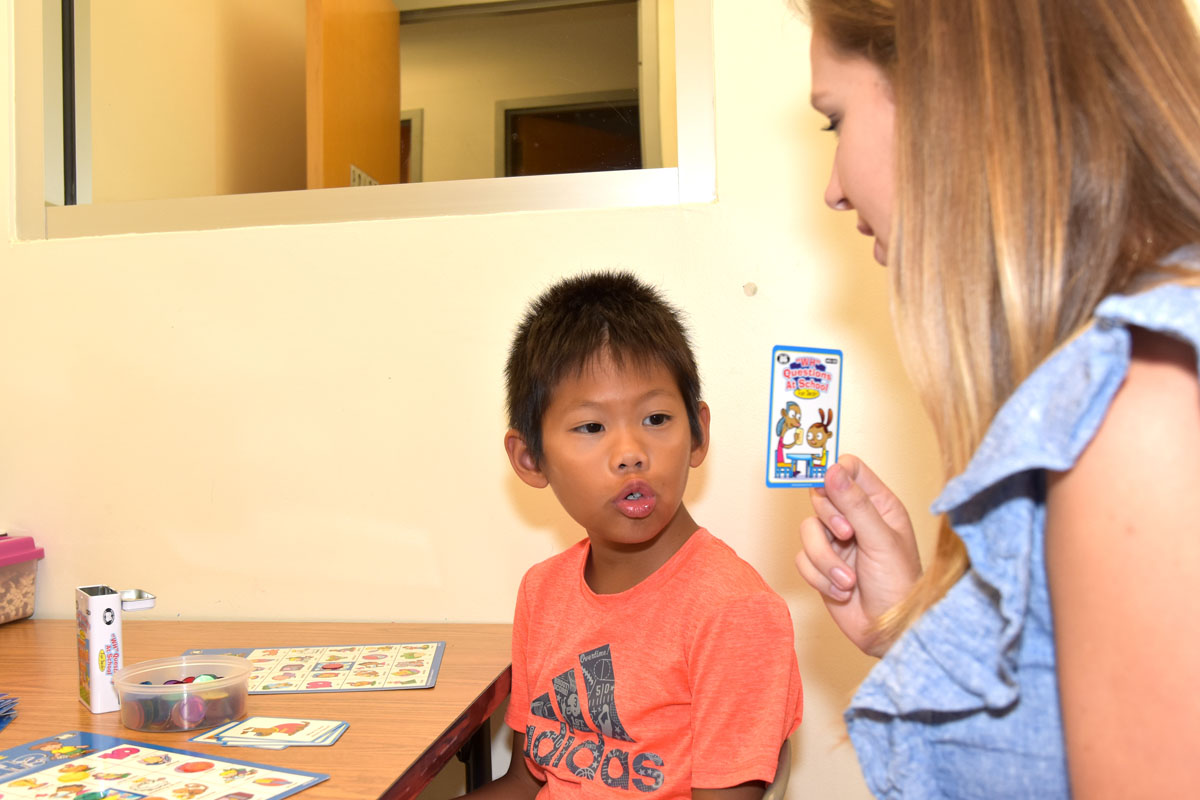
- Professional
- Focus on the Client
- Student Qualifications
1. Professional
Professional Standards are followed regarding requirements outlined in the Council on Academic Standards (CAA) https://www.asha.org in speech-language pathology, in association with ASHA (https://www.asha.org).
Specific Professional Standards are met and surpassed regarding amount of time student clinicians are observed in person (25% minimum) as stated by ASHA. (https://www.asha.org/Certification-Standards-for-SLP--Clinical-Practicum/).
The CDC also maintains the requirements for the Council for Clinical Certification in Audiology and Speech-Language Pathology. (https://www.asha.org) In addition, the CDC maintains ASHA’s Code of ethics. (https://www.asha.org/Code-of-Ethics/)
The guidance of these standards is beneficial in helping our students become successful in obtaining a Clinical Fellowship after graduation, and then a Certificate of Clinical Competence in speech-language pathology and state licensure by the Department of Health (state of Florida).
2. Focus on The Client
Non-Discrimination
The Communication Disorders Clinic (CDC) does not discriminate regarding age, race, gender, ethnicity, religion, veteran status, or sexual orientation. A waiting list is maintained, and the Clinic Director notifies prospective clients, as space becomes available. The CDC operates as both a full-service professional clinic and a teaching clinic, to educate student clinicians. The CDC also operates free of charge, providing services to the community at large.
Privacy
All clients who attend the Clinic have a right to privacy in obtaining services from the Clinic. All matters concerning client behavior and case management are kept strictly confidential – anyone who observes -- all of the students, clinicians and all of the clinical supervisors have taken FAU’s Health Insurance Portability and Accountability Act (HIPAA) training. The CDC expects student clinicians to only discuss clients in secure areas. All paperwork connected with the teaching of students is sent with an assigned (by the Clinic Director) encryption, and hard-copy files are placed in locked filing cabinets. The CDC also maintains an Infection Control policy for the safety and well-being of our clients.
Unauthorized individuals (those who have not taken FAU’s HIPAA training) are not permitted to observe treatment or evaluation sessions. Students in courses that require observation of clinical sessions are provided strict guidelines to follow. Parents, spouses, and caregivers are the only ones allowed to observe without taking the HIPAA course. If observers are disturbing sessions in any way, the student clinicians should notify their observers, supervisors, or the CDC Director. Observers who have not complied with a clinician’s request for silence will be asked to leave by the CDC Director or clinical supervisor.
Compassion
In addition, the Department and Clinic seek to instill in students a compassion for their clients, so that the well-being of the client is a priority in all regards. It is essential for students to see the “whole person”; not just the “speech mechanism” or “language development”, as they treat clients in the CDC, and in their future as they go beyond the clinic as speech-language pathologists in many various settings and communities.
3. Student Qualifications
Student Clinicians have completed the following, prior to their Clinical Practicum assignment:
- A bachelor’s degree (usually in communication disorders, but also in other areas) and one semester of graduate level courses in communication sciences and disorders;
- 25 hours of observation, signed off by a licensed and certified speech-language pathologist;
- Level 2 Background Check;
- Professional Liability Insurance.
Student Clinicians are required to earn 375 hours of Clinical Practicum, divided up between the CDC at FAU and professional working settings, prior to graduating with their Master’s Degree.
Other on-campus opportunities for students include Clinical Practicum work at the Karen Slattery Educational Research Center for Child Development (on the FAU Boca Campus); and the Louis and Anne Green Wellness Center (adjacent to and part of the FAU Boca Campus). There are also opportunities for video-therapy to such places as Rwanda.
What To Expect
Most new clients will be evaluated, unless they have been evaluated in the last six months and we have received that report. Other evaluations will be administered “as needed”.
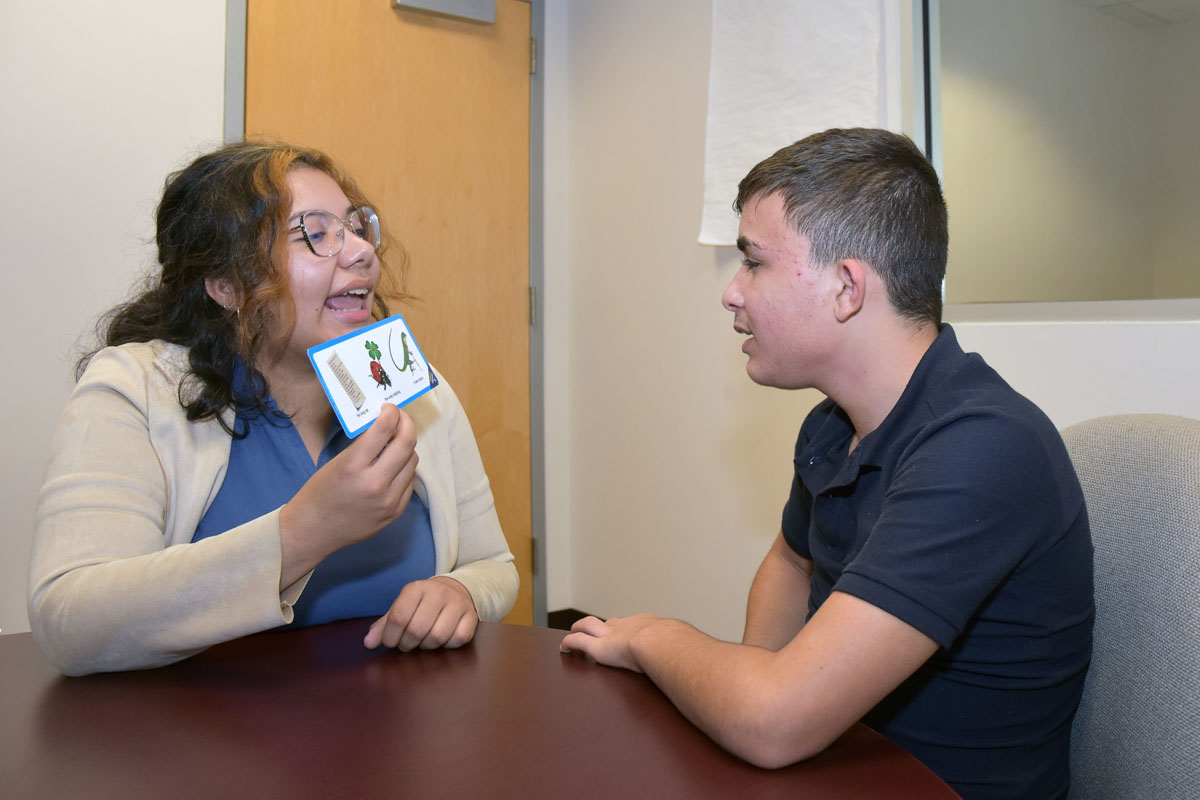
Every semester you will be emailed the following:
- A Welcome to the Semester letter;
- A Semester Calendar;
- A Letter regarding attendance and timeliness
At the beginning of the semester
The student clinician will call and/or email you
In the middle of the semester
There is an opportunity for a conference with the student clinician and supervisor
At the end of the semester
You will receive (by hand or in the mail) a report of progress, the Semester Treatment Report. There may also be a conference, if needed, at the end of the semester.
During the Semester
Caregivers and family are encouraged to watch the sessions in an observation room with a one-way mirror, and listen using headphones. This enables family and caregivers to follow through on what is being done at home, and also to receive suggestions from the supervisor who is observing the session, for the purpose of teaching the student clinician.
Department Of Communication Sciences And Disorders
Communication Disorders Clinic
Improving People's Lives
4th Floor, Building 47 (College of Education) on the FAU Campus at Boca Raton
First Session starts at 9 am; Last Session starts at 6 pm Call 561-297-6074.